
Data centers in Canada
If you have your own servers and want them housed in a data center in Canada, you have plenty of buildings to choose from.
| City | Province | Buildings | Main operators |
|---|---|---|---|
| Toronto | Ontario | 46 | Equinix, Cologix, eStruxture Data Centers |
| Montreal | Quebec | 35 | Cologix, eStruxture Data Centers, Vantage Data Centers |
| Calgary | Alberta | 15 | Equinix, Rogers Data Centres, Arrow Datacenters |
| Vancouver | British Columbia | 13 | Cologix, eStruxture Data Centers, Polaris Realty |
| Winnipeg | Manitoba | 10 | LES.NET, University of Winnipeg, The Exchange Group |
| Ottawa | Ontario | 6 | PureColo, DNSnetworks, Equinix |
| Halifax | Nova Scotia | 4 | EXA Infrastructure, Internetworking Atlantic, Hibernia Atlantic |
| Edmonton | Alberta | 3 | Wolfpaw Data Centres, Colliers International, ThinkTel Communications |
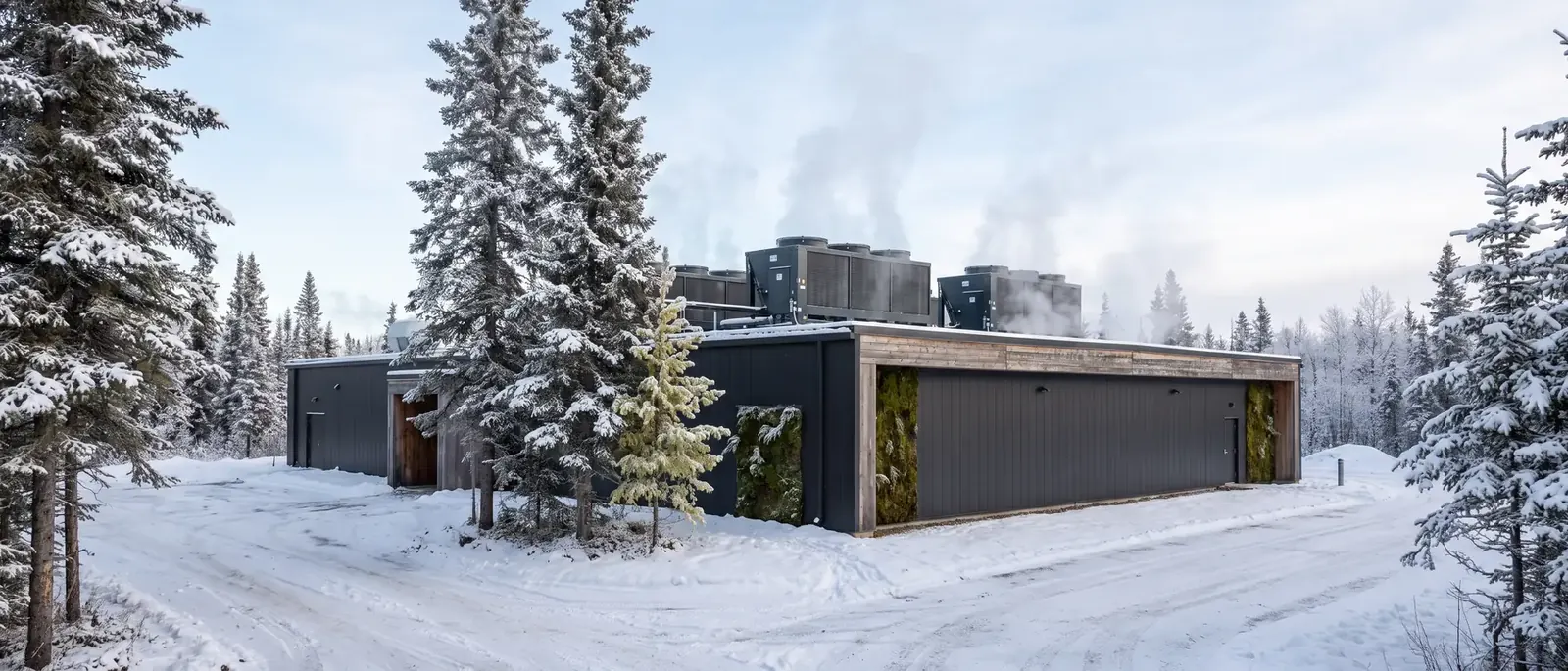
This site covers 132 buildings across eight Canadian cities, using listings from PeeringDB, a free public directory of data centers. Colocation works like this: the machines belong to you, and what you pay for is space, power and an internet line inside a building someone else keeps secure. Toronto and Montreal hold most of that choice, with 46 and 35 of the 132 buildings.
Colocation in Canadian cities
You get the deepest pool of buildings, and the most connection options, in Toronto and Montreal. The site also lists buildings in Calgary, Vancouver, Winnipeg, Ottawa, Halifax and Edmonton.
| City | Sites | Exchanges | Province | Leading providers |
|---|---|---|---|---|
| Toronto | 46 | 6 | Ontario | Equinix, Cologix, eStruxture |
| Montreal | 35 | 5 | Quebec | Cologix, eStruxture, Vantage |
| Calgary | 15 | 3 | Alberta | Equinix, Rogers, Arrow |
| Vancouver | 13 | 4 | British Columbia | Cologix, eStruxture, Polaris Realty |
| Winnipeg | 10 | 1 | Manitoba | LES.NET, University of Winnipeg, The Exchange Group |
| Ottawa | 6 | 1 | Ontario | PureColo, DNSnetworks, Equinix |
| Halifax | 4 | 1 | Nova Scotia | EXA Infrastructure, Internetworking Atlantic, Hibernia Atlantic |
| Edmonton | 3 | 1 | Alberta | Wolfpaw, Colliers, ThinkTel |
What is an internet exchange? It is one place in a city where lots of networks connect, so traffic moving between them only has to travel a short distance. Note that the exchange count covers the whole city, not each building, so check the building you are thinking about.
Toronto, Montreal and Vancouver all count eStruxture among their top providers, and the company calls itself the largest Canadian data center provider. Two other names with a strong footprint south of the border, Equinix and Cologix, also appear in several Canadian cities.
Each of these eight cities has its own page listing every building, who runs it, how many networks it has, its internet exchanges and its address. Start with the city that suits you, then use its page to compare buildings.
Growth is coming, too. CBC counted 159 large data centres in Canada either planned or being built, and Canada's national AI strategy promises at least $2 billion in new investment, but that figure does not tell you what space is available to rent or what it will cost. CBC reports that data centers built for AI often need hundreds of megawatts (a megawatt is 1,000 kW), while ordinary ones need a couple.
Is colocation in Quebec cheaper?
Why does Quebec get so much attention? Electricity. Power there runs about $0.04 per kilowatt-hour, versus $0.18 in California. A kilowatt (kW) is how much electricity your servers use at one moment, and a kilowatt-hour is that much used for one hour.
The bigger your power draw, the more that price gap matters. Cheap power alone will not tell you your rent, since the building itself, the security and the connections each carry their own cost. Want your real monthly price in Quebec? Ask the providers there for quotes.
Every Quebec building listed here sits in Montreal: 35 buildings, 5 internet exchanges. Cologix, eStruxture and Vantage Data Centers are the main operators, and the Montreal page lays out every site, showing where it sits and which networks call it home.
Data centers in Ontario: Toronto and Ottawa
Toronto has the most listed buildings among the eight Canadian cities this site covers: 46 buildings and six internet exchanges. By PeeringDB's count that ranks it with the big American hubs, a step behind Los Angeles at 49 buildings and a step ahead of Atlanta at 42.
Ottawa is Ontario's other city on this site: 6 buildings, 1 internet exchange. PureColo, DNSnetworks and Equinix are its main operators, so local firms and a global name sit side by side there.
Building new capacity around Toronto has got harder. DatacenterHawk says construction and labour costs make Toronto a tough place to develop, and in Oakville, next door, councillors voted in August to pause new data centre construction for 1 year. That pause is only temporary, and it only touches Oakville. If all you need is a few shelves of space, what matters is the 46 Toronto buildings already running, not projects that have not broken ground.
What a rack costs, and what comes with it
Data centers rent space by the rack, a tall metal cabinet that holds servers stacked on top of each other. You can rent room for just a few servers or a whole cabinet, and each size comes with a set amount of power. Space is measured in units called U, each about the height of one slim server.
This site has no Canadian price lists, but US list prices show you the rough shape of the market. Everything below is billed monthly in US dollars.
| Space | Power that comes with it | Published rates |
|---|---|---|
| 1 to 4 servers | about 0.24 kW | $69 to $199 |
| Quarter rack (about 10U) | about 0.6 kW | $330 to $399 |
| Half rack (about 21U) | about 1.2 kW | $530 to $699 |
| Full rack (42U) | about 2.4 kW | $930 to $999 |
Need more power than a package includes? Our price tool asks three things, your space, your power and your city, and gives you a rough monthly range that adds the cost of the extra power. For Canadian cities it uses rents from CBRE, a large property firm that tracks 16 North American markets, where extra power costs $155 to $275 per kW each month, so treat the answer as a broad guide, not a local price.
For a real Canadian number, use the single form beside this text to ask for quotes. It wants to know your space and power needs, the city, your timing, how long a contract you want and how to reach you, and it sends your request to as many as 3 providers or brokers that have room in that market. They come back to you over email with prices, and there is no charge for asking.