
Tier 3 data center
A tier 3 data center is built so any single piece of it can be taken offline for service and the IT gear inside just keeps going, according to the Uptime Institute, the body that assigns the tier ratings.
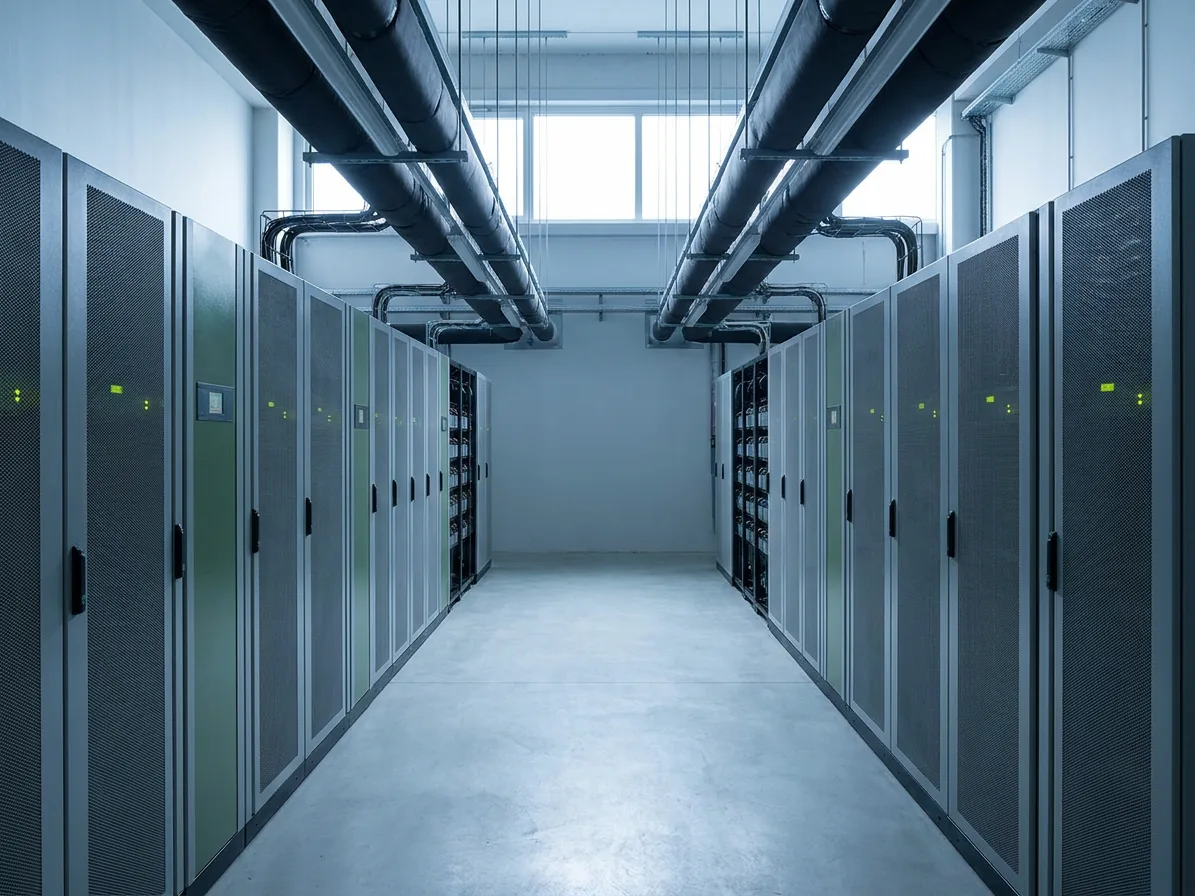
If you rent server space in a US or Canadian city, this is the level you'll usually see, since most colocation there is priced that way and CBRE's market rent figures cover N+1 or Tier III space.
Maintenance without shutdowns
The Uptime Institute's word for Tier 3 is concurrently maintainable. What that means day to day: workers can fix the building and your servers never notice. Because of how it's built, a Tier III facility needs no shutdowns for maintenance or equipment swaps, so normal repairs shouldn't get in your way.
The trick is spare gear. Engineers call this N+1. N stands for whatever the building must have to run, and the 1 is one more unit standing by whenever something gets pulled for service. A Tier 3 building carries full N+1 everywhere.
Uptime and downtime by tier
Here are the numbers HPE lists tier by tier. Read them as design goals, not as a guarantee from any particular site.
| Level | Uptime target | Downtime per year |
|---|---|---|
| Tier 1 | 99.671% | about 28.8 hours |
| Tier 2 | 99.741% | about 22 hours |
| Tier 3 | 99.982% | about 1.6 hours |
| Tier 4 | 99.995% | about 26.3 minutes |
Notice the big jump sits between Tier 2 and Tier 3, where a year of downtime drops from 22 hours to under 2. Going on up to Tier 4 buys you a bit more than an hour each year.
Tier 4 compared with Tier 3
Tier 4 keeps everything Tier 3 has and adds fault tolerance. A fault tolerant site is one that's meant to survive a failure nobody planned for, not just scheduled work.
To get there, a Tier 4 site runs several independent systems that stay physically separate, both for the gear making power and cooling and for the routes that carry them to your equipment. Rather than 1 spare unit, it keeps a complete second set of its main systems, sometimes a spare on top of that. People call this setup 2N or 2N+1.
Is the highest tier always the safest bet?
Not by itself. The Uptime Institute leaves the choice to the owner, who picks the tier that suits the business, so what counts is how much downtime your work can absorb.
The industry weighed that same tradeoff. Between roughly 2010 and 2012, new projects stopped chasing Tier 4 and settled on Tier 3 or 3+ because that struck the sensible cost balance. That shift is a big reason Tier 3 is everywhere now.
Tier 3 rack prices by city
Your bill covers the space itself plus the power your gear draws, counted in kilowatts (kW). A kW is just a unit of electrical power. A full rack lists at $930 to $999 a month with about 2.4 kW included, and anything beyond that gets billed at the local rate.
Each figure in this table is our estimate for a full rack that draws 5 to 10 kW, based on CBRE asking rents. An actual provider quote can differ.
| Market | Rent asked per kW monthly | Full rack (5–10 kW) each month |
|---|---|---|
| Northern Virginia | $190–$235 | roughly $1,420–$2,790 |
| New York Tri-State | $190–$235 | roughly $1,420–$2,790 |
| Chicago | $195–$225 | roughly $1,440–$2,710 |
| Silicon Valley | $200–$275 | roughly $1,450–$3,090 |
| Atlanta | $185–$200 | roughly $1,410–$2,520 |
| Dallas-Ft. Worth | $160–$185 | roughly $1,350–$2,410 |
| Denver | $155–$175 | roughly $1,330–$2,330 |
CBRE follows 16 markets, and across them rents run between $155 and $275 for each kW monthly. Silicon Valley tops the range, and Central Washington, Seattle and Denver tie for the cheapest floor. Once you've picked your space, power and market, the site's price tool shows you a monthly range.
Common questions about data center tiers
How do Tier 1, 2, 3 and 4 differ?
Tier 1 is the entry level. It shields you from human mistakes but not from gear failing out of the blue. Tier 2 lowers expected downtime, Tier 3 means maintenance needs no shutdown, and Tier 4 is made to shrug off sudden failures too.
Should my servers be in Tier 2 or Tier 3?
It comes down to maintenance. Tier 3 lets the building be serviced without switching off your IT, which trims expected downtime by roughly 20 hours a year versus Tier 2. Whether that's worth paying for depends on what a blackout would cost your business.
Is my power decided by the tier?
No. The tier tells you how a building deals with maintenance and failures. Your power depends on the package you rent. A quarter rack, for instance, includes roughly 0.6 kW, and a half rack roughly 1.2 kW, with anything extra billed at the local rate.
Where do the official Tier 3 requirements live?
Go to the Uptime Institute's tier pages, since it owns the ratings. If a provider tells you a building is Tier 3, it's fair to ask how it satisfies the requirement that any piece can come down for service without halting your IT.