ITAD services (IT asset disposition)
ITAD services collect your old computers, servers and drives, wipe the data off them, and resell what still has value.
Shred Nations lists hard drive shredding at $7 to $20 per drive. That is its indicative shredding price, not a full disposal quote.
Phone us or request quotes, and up to 3 disposal firms will send you their pricing along with proof of the certificates they provide.
Your disposal request
Describe what you have, roughly how much of it there is, and the city it sits in, then finish with your own details: name, company and work email. Requesting quotes is free; the firms may pay this website to connect you with them.
Up to 3 disposal firms in your city email you a quote. Ask each for proof of its certification before booking a pickup.
IT asset disposition near you
Disposal firms pick the gear up from your premises, so the city where the equipment is located determines which firms can quote for the job. Just tell the request form which city you're in, pick from the 48 this site covers, or enter a different one.
A full-service firm sets up the pickup for you, per ERI. When the work is done, it gives you a certificate showing sanitization or destruction, whichever applies, with the method and drive serial numbers. Most also transport your equipment under a secure chain of custody, meaning a written log of who had it at each point along the way, per Park Place Technologies.
Not sure what your items are called? Phone now and describe them however you like.
Data center IT asset disposition
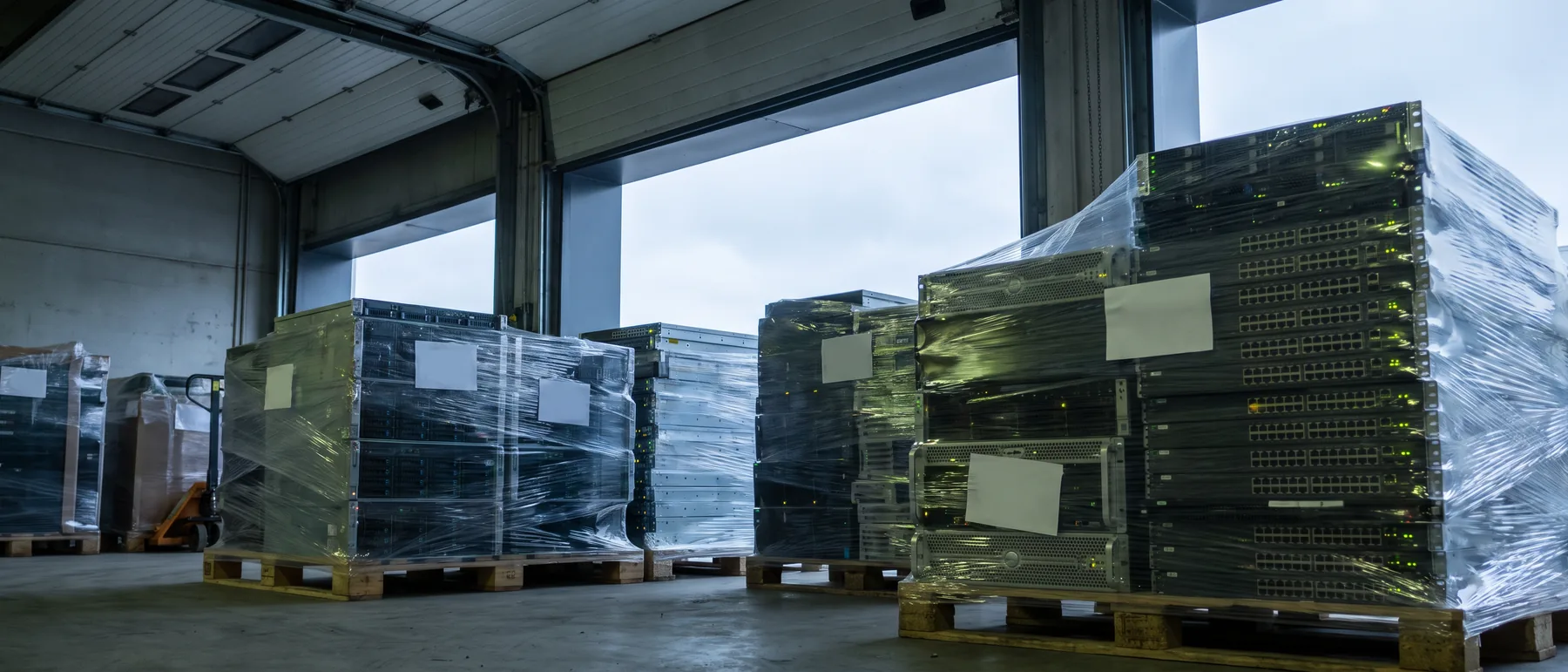
Gear pulled from a rack or a cage goes through the same process as office equipment, just in bigger volumes, and the firms handle that all the time.
- Pickup: the firm takes the equipment from your site on a set date.
- Chain of custody: a written log shows who has the equipment at each step.
- Wipe or shred: drives are wiped to a named NIST level or destroyed, and some firms do this at your site so nothing leaves with data on it, as Park Place Technologies notes.
- Certificate: you get a certificate showing sanitization or destruction, whichever applies, with the method and drive serial numbers.
- Resale or recycling: working servers and network gear can be resold, called remarketing, which brings back some of your cost, and the rest is recycled.
Ask each firm to state in its quote:
- How and when the pickup happens
- The chain-of-custody record you will get
- A report listing each drive by serial number
- The certificate type: sanitization, destruction or both
- How long it takes from pickup to certificate
- What share of resale value comes back to you
One request is enough whether you're dealing with two servers, a crate full of drives, or a whole room of equipment.
| Way to destroy drives | What happens | Can you watch? |
|---|---|---|
| Mobile, at your site | A shred truck comes to you | Yes |
| Off site | Drives go to a secure plant | No |
| Mail-in | You ship drives to the plant | No |
Service options as Shred Nations lists them. Each one ends with a certificate of destruction.
What does properly certified data destruction look like?
A firm you can trust follows NIST SP 800-88, the US government's playbook for clearing data off storage devices. The guide names this process sanitization: rendering the data so hard to get back that no one would bother trying. The current edition came out in September 2025, per NIST.
There are 3 levels in the guide. Clear overwrites all the storage areas a user is able to access. Purge goes one step further and stops recovery even with top lab tools. Destroy finishes the drive permanently through shredding, burning, crushing or melting, as Blancco explains.
Find out from each firm which level it uses, since that's the wording your documents will carry afterward.
| NIST level | What happens to the drive | Drive reused after? |
|---|---|---|
| Clear | Overwritten so simple recovery tools fail | Yes |
| Purge | Recovery infeasible even with lab techniques | Often |
| Destroy | Shredded, crushed, melted or burned | No, the drive is gone |
What a certificate of destruction lists
- The serial number of each drive
- The NIST level used: Clear, Purge or Destroy
- The method plus the machine or software used
- When and where the work was done
- Who touched the drives at each step
- The firm's certification, like R2v3 or e-Stewards
Which certifications should a disposal firm have?
The badge a firm holds itself is one thing; the certificate it hands you for your equipment is another. Three names come up often. Two are electronics recycling standards, and one is a data destruction certification:
- R2v3, run by a group called SERI and adopted in June 2020, is an electronics recycling standard. A certified firm must follow NIST SP 800-88 when wiping data and must track where your equipment goes after it leaves, per ITAD Intelligence.
- e-Stewards is another electronics recycling standard.
- NAID AAA is a different kind of certification. It covers only data destruction, so a firm can hold it with or without a recycling standard.
Firms with e-Stewards usually charge 10 to 20% more than firms with R2v3 only, so weigh that gap against what your data needs.
Frequently asked questions about ITAD services
After taking out the hard drive, is a computer safe to bin?
Take the rest of the computer to an electronics recycler, not the trash. Keep in mind the drive you pulled still holds everything until it's wiped or destroyed, so make sure it's covered in what you ask for. Back in 2017, a NAID study turned up recoverable personal information on 40 percent of secondhand devices purchased over the internet, figures highlighted by ITAD Intelligence.
What belongs on an IT asset disposal certificate?
A real certificate states the type of sanitization, the method applied, the tools used and how the outcome was checked, per Blancco. A page that just reads "destroyed" gives you nothing to say if someone later asks what became of your files.
Do "IT asset disposal" and "ITAD" mean the same thing?
They do. ITAD is simply short for IT asset disposition, and plenty of firms describe that identical work as IT asset disposal or decommissioning. Whatever label a firm goes by, you're after the same 3 things: transport that keeps your gear safe, wiping to a level you can name, and paperwork you can hold on to.
More on retiring hardware: Hard drive destruction, Decommissioning.